Curing vs. Sealing
What is curing?
Maintenance of moisture and temperature of freshly placed concrete during some definite period following placing, casting or finishing to provide enough moisture and the proper temperature level to promote continued hydration within the hardened concrete (holds the water in the concrete).
What is sealing?
Sealing concrete with a concrete sealer protects and seals the surface to help prevent penetration of water, salts, or stains. (holds the water out of the concrete)
Why Cure Concrete?
Curing is one of the most important steps in concrete construction and regrettable one of the most neglected. Effective curing is absolutely essential for surface durability. Fresh concrete must be kept warm and moist until the mixing water combines chemically with the cement (hydration). That’s what hardens the concrete and gives it strength. With curing a 4000 psi Design mix strength should exceed 4000 psi’s in 28 days at normal temperatures. Without curing, the same batch of concrete might never reach more than 2000 psi. Low-strength exposed concrete does not perform well when subject to frequent freezing and thawing. It is difficult to apply too much curing compound, but too little or none is asking for trouble.
Why Seal Concrete?
Sealers can help prevent damage from freeze/thaw cycles and salting. They keep water from getting into the surface pores. Some of them can cause some darkening of the slab. Newly cured concrete should have its period of air-drying before being sealed. Most sealers applications are effective for about a two year period. *Industry advancements have brought Impede Intraseal, an integral sealer mixed in the concrete, allowing the contractor to eliminate the need to come back later and seal*
When do you Cure Concrete?
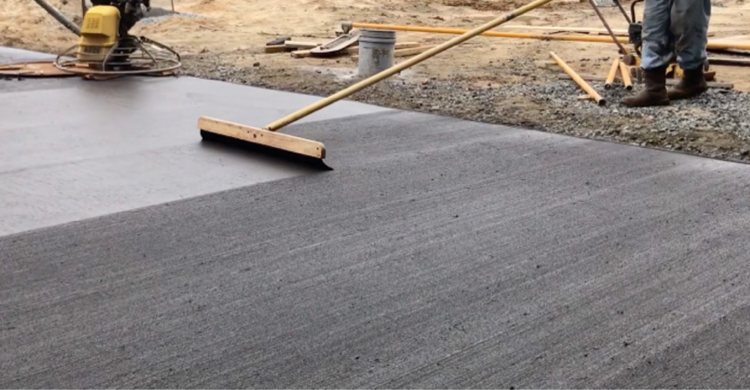
Curing compound should be applied immediately after finishing has been completed and the concrete surface will support the weight of a workman.
When do you Seal Concrete?
Concrete should have a minimum of 7 days of curing before a concrete sealing is applied. Sealer can be applied anytime after initial curing has taken place. *Industry advancements have brought Impede Intraseal, an integral sealer mixed in the concrete*
Cure & Seal Products – Common Misconception
Many products are labeled as “Cure & Seal”. Curing and sealing CANNOT be done in one step with a topical product. These products simply can serve as a Cure OR Seal – depending on when they are used. See definitions above
WARNING
Curing concrete when temperatures fall to 40F or lower can cause damage to the concrete.
We recommend as Mid September approaches and the temperatures fall to let the concrete cure without curing compound. It is recommended to use a waterproof cover and maintain curing for a least 7 days at temperatures above 40F. 30 days after concrete has been cured, a concrete sealer can be applied, unless sealing was done internally via Impede Intraseal.
CONTACT
For questions concerning curing or sealing concrete, contact:
Dan Large, 262-685-7749 or dan.large@frcllc.us
Cole Large, 262-685-8949 or cole.large@frcllc.us
Cael Large, 262-339-5111 or cael.large@frcllc.us