Residential Fiber Reinforcement For Concrete
Answering common questions & addressing misconceptions about fiber-reinforced concrete in residential applications.
Nature of Concrete
By nature, concrete cracks when it dries & shrinks. In fact, as stated in ACI 302 1, “some random cracking should always be expected, even with sufficiently close joint spacing. It is reasonable to expect random visible cracks to occur in 0 to 3 percent of the surface panels formed by saw-cutting, construction joints, or both”. Because of this, quality contractors take multiple steps to make sure they limit the chance of a random crack.
Concrete Reinforcement
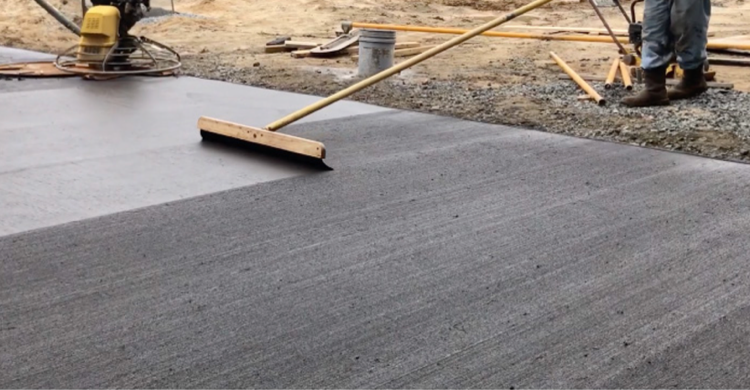
Proper jointing is the primary way to reduce the chance of random cracks. Contractors put joints in concrete slabs in the attempts to control cracking with an aesthetic appeal. The “cracks” still occur, but they are isolated to clean, organized joints, providing homeowners a quality look & solid investment.
Concrete is reinforced to help keep cracks held tightly together, not to stop cracks from happening
Rebar (or wire mesh) does nothing for a slab until it cracks. ACI 302 1 states that “Reinforcement will not prevent cracking. If the reinforcement is properly sized and located, cracks should remain tightly closed”. The purpose of reinforcement, as outlined in ACI 360 2, is to limit the width of any cracks that may form and joints in the slab. However, when using wire mesh/rebar, it must be “accurately located in the upper 1/3 of the slab with a minimum of 1 ½” paste coverage”. Proper steel placement is a significant challenge.
Slab thickness and subbase carry load & structural value. Poor subbase support will result in cracking, regardless of the type of reinforcement. One layer of wire mesh / rebar or fiber reinforcement provides temperature & shrinkage value (to hold cracks tightly together from drying shrinkage). It will not prevent an overloaded slab from cracking.
Fibers: Modern Reinforcement
Since the development of macro fibers in the early 2000’s, fiber reinforcement has evolved into the premier method of slab-on-grade & overlay concrete reinforcement. Macro-synthetic fibers have been recognized in ACI 360 1 as a method of reinforcement for crack width containment since 2010.
Wire mesh & rebar have major limitations since they are singular planes of reinforcement. They offer a limited cross-sectional area of coverage in the slab and are ineffective if they’re not properly placed.
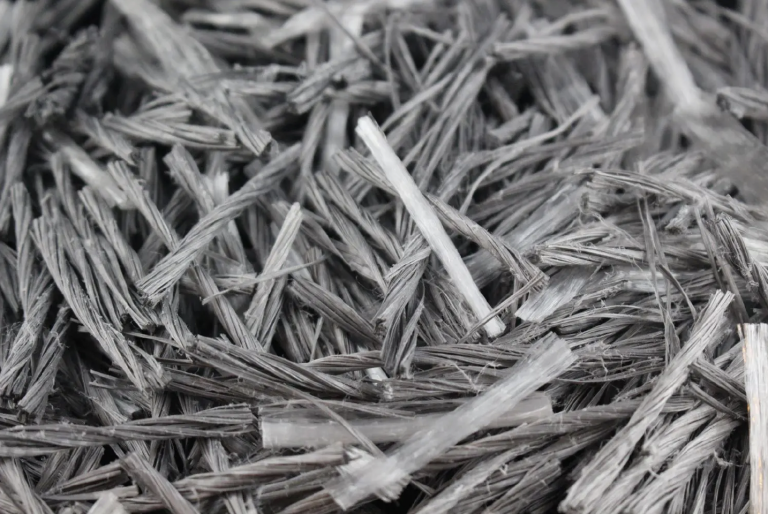
The fiber advantage: fibers are properly placed as an integral part of the mix. The 3D reinforcement is blended into every cubic inch of concrete & provides reinforcement anywhere that cracks & stresses emerge.
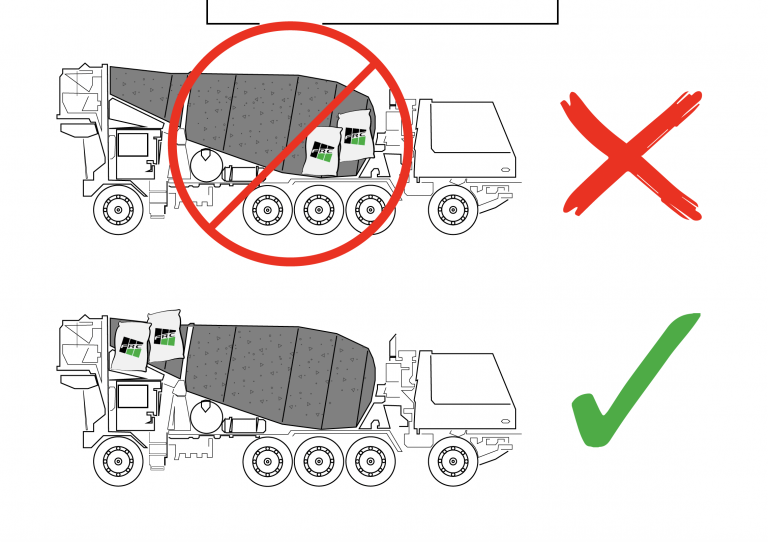
The right fiber will get the right results – mixing, finishing & performing well. When introduced & mixed properly, fibers will distribute throughout the concrete. Contractors should always seek out a quality finishing fiber.
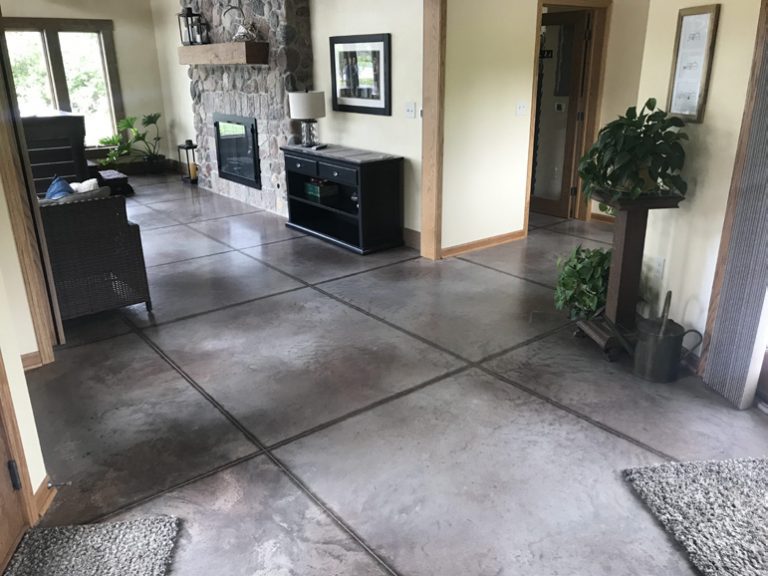
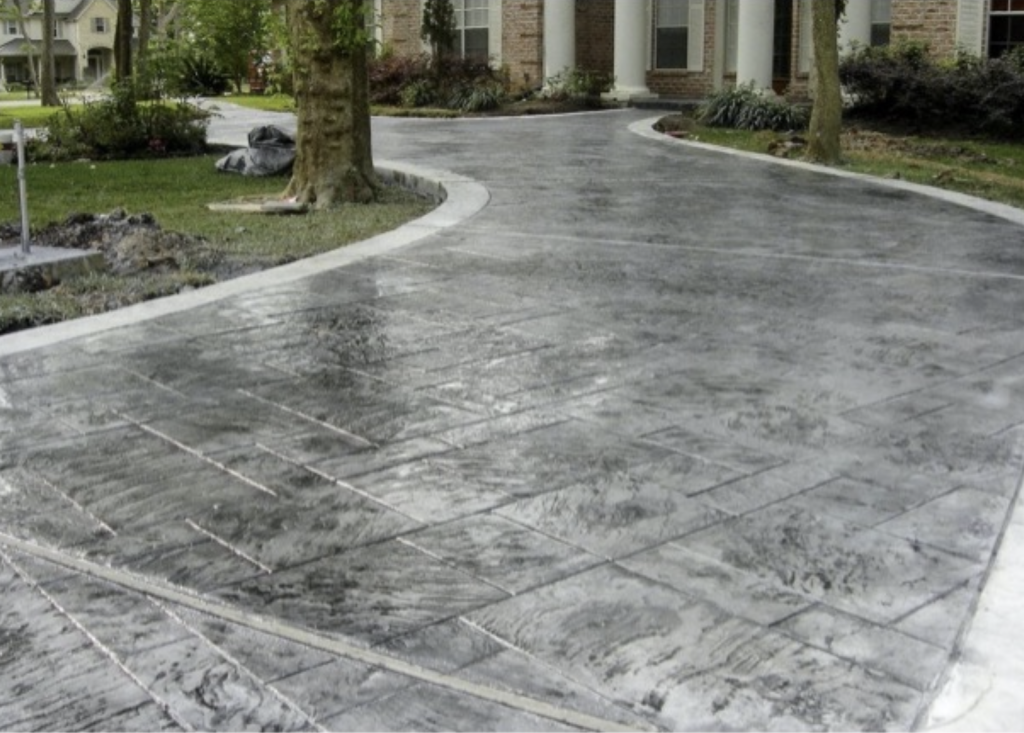
In Figure 1 below, decorative applications with high dosage rates of Forta Ferro macro fiber look excellent.
Fiber Dosage Rates
ACI 360 1 defines four types of slabs, with the two relevant to residential being the 3.2.1 Unreinforced concrete slab & the 3.2.2 Slabs reinforced for crack-width control.
ACI’s 3.2.2 slabs have reinforcement requirements. They require 0.1% volume of steel, or equivalent strength macrosynthetic or steel fibers. The minimum macro fiber dosage rate recommended by ACI is 3 pounds per cubic yard (pcy). Remember that this is in the 3.2.2 slabs with reinforcement requirements.
Most residential slabs fall under the 3.2.1 classification: unreinforced by ACI definition. However, common practice is to use some reinforcement to keep joints held together. Reinforcement that would fall under this category would include 10 gage wire mesh, widely spaced rebar grids or micro fibrillated fibers. Fibrillated fibers have historically been dosed at 1.5 pcy, dating back to the 1980s. Since the advancement of macro technology, many contractors prefer macro fibers at 1.5# pcy to fibrillated. This is acceptable in the 3.2.1 slab application, as ACI doesn’t have a minimum reinforcement requirement for these slabs.
*ACI 302 – Guide to Concrete Floor & Slab Construction
*ACI 360 – Guide to Design of Slabs-on-Ground